Krestovsky Island
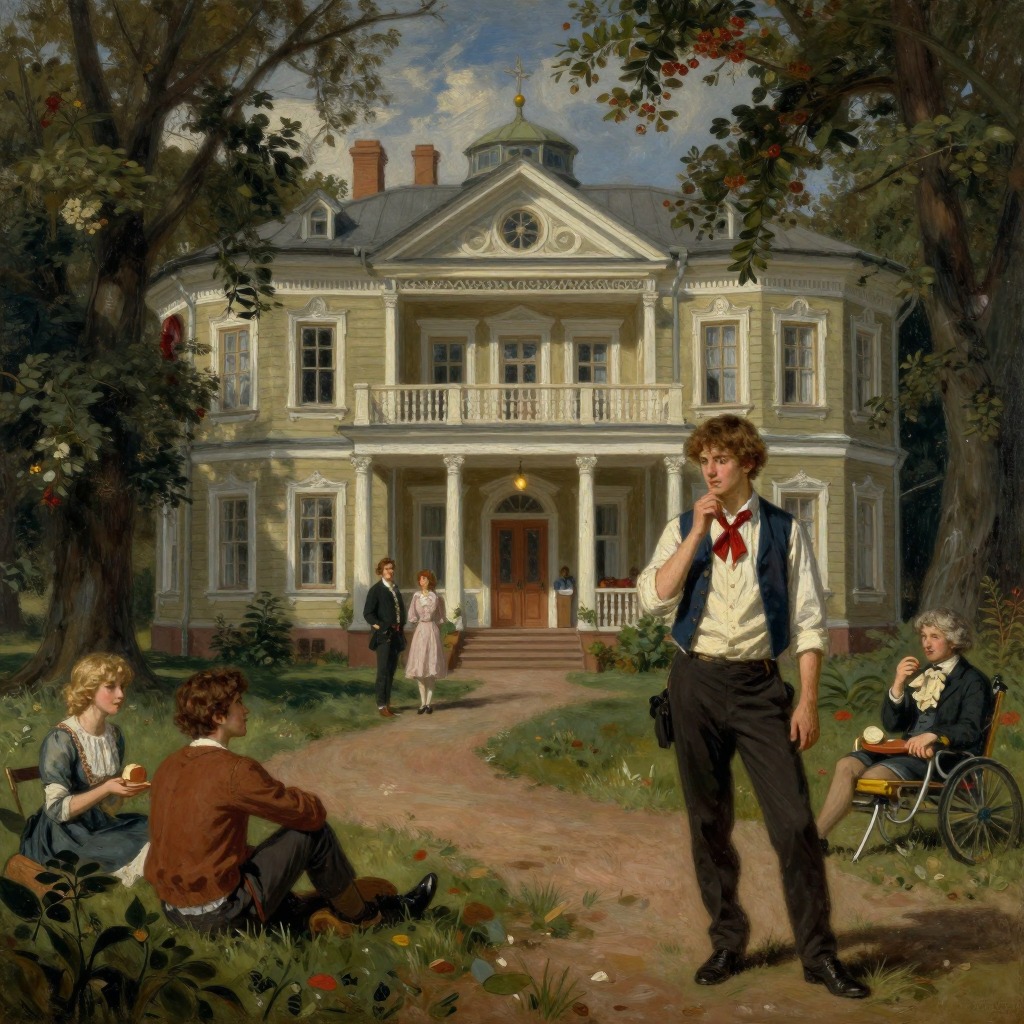
Krestovsky Island appears in Fyodor Dostoevsky's White Nights as one of the summer villa destinations that define Petersburg's seasonal exodus, a place whose visitors the Dreamer can identify at a glance by their distinctive air of irrepressible gaiety. The island belongs to a constellation of summer retreats—Kamenny and Aptekarsky Islands, the Peterhof Road, Pargolovo, and the Black River—that empty the city each spring and leave the Dreamer feeling abandoned. His ability to read the social geography of these destinations reveals how deeply he has internalized the city's rhythms even as he remains excluded from them.
The Summer Exodus and the Dreamer's Isolation
The Dreamer's acute awareness of Krestovsky Island emerges from his broader observation of Petersburg's summer transformation. As he walks the Nevsky, the Gardens, and the embankment, he notices that every respectable gentleman who takes a cab seems to be heading to a summer villa, and that the very air of passers-by betrays their destination. The inhabitants of Kamenny and Aptekarsky Islands or the Peterhof Road are marked by studied elegance, fashionable summer suits, and fine carriages; visitors to Pargolovo and places further away impress by their reasonable and dignified air; but the tripper to Krestovsky Island can be recognized by his look of irrepressible gaiety. This taxonomy of summer happiness is a product of the Dreamer's lonely investigations, a way of organizing a world from which he feels excluded. He fancies that everything is astir and moving, that Petersburg threatens to become a wilderness, and that he alone has nowhere to go and no reason to go away. The waggons loaded with furniture and the boats crawling along the Neva or Fontanka to the Black River or the Islands multiply tenfold in his eyes, each caravan a reminder of his own rootlessness.
The Contrast Between Gaiety and Melancholy
The irrepressible gaiety associated with Krestovsky Island stands in sharp contrast to the Dreamer's own moral condition. From early morning he has been oppressed by a strange despondency, feeling that everyone is forsaking him. He wanders about the town in profound dejection for three whole days, not knowing what to do with himself. Even at home he feels ill at ease, scanning his grimy green walls and the spider's web that Matrona has so successfully encouraged, unable to find comfort. The gaiety of the Krestovsky Island trippers is a quality he can observe but not share—a happiness that belongs to others and that he can only catalog from the outside. This contrast deepens the pathos of his solitude: he knows the city's summer geography intimately, but that knowledge only sharpens his sense of exclusion.
Narrative Significance
Krestovsky Island functions in the narrative as one of the concrete markers of the social world from which the Dreamer is alienated. His ability to distinguish the summer villa residents by their manner and dress is a symptom of his obsessive attention to the life around him, a life he can observe in minute detail but cannot enter. The island's name, like those of the other summer destinations, recurs in the Dreamer's monologue as part of the inventory of a city that is always leaving him behind. When he later meets Nastenka on the Canal Embankment and they sit on the seat where she once made an agreement with the Lodger, the contrast between the gaiety of Krestovsky Island and the melancholy of the embankment underscores the emotional geography of the story: happiness is always somewhere else, always associated with places the Dreamer can name but never inhabit.